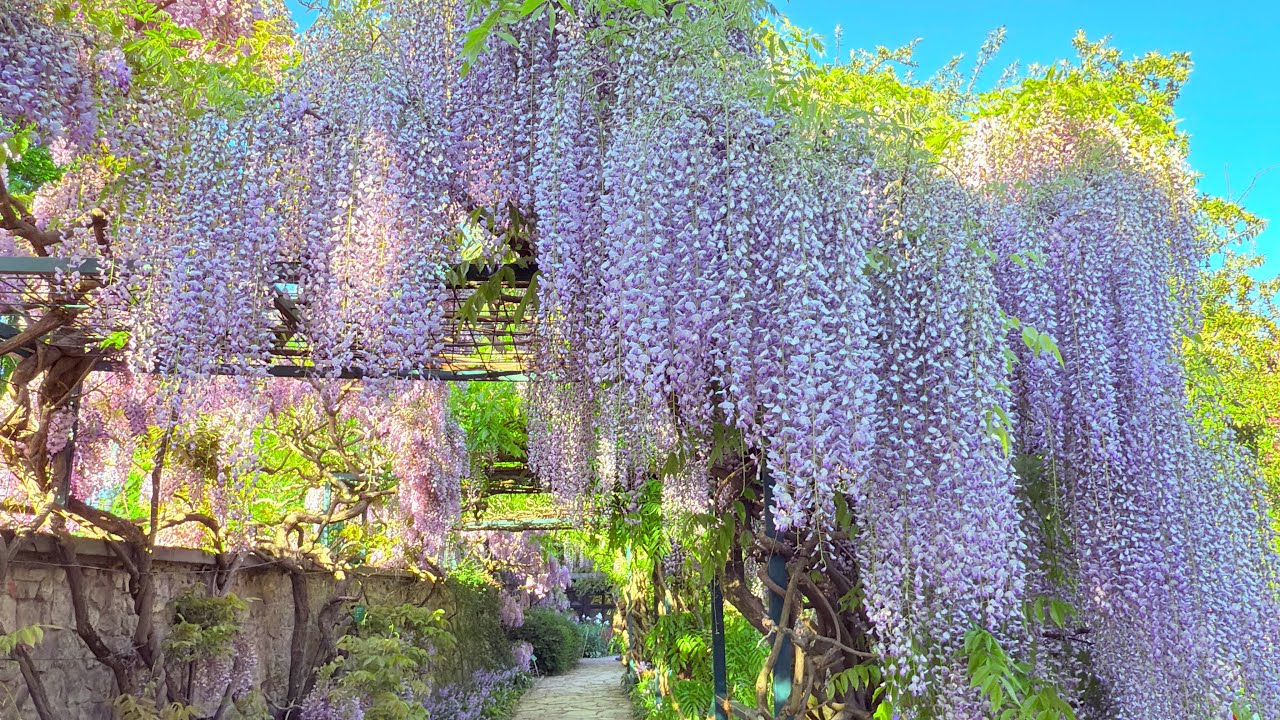
Unveiling the Enchantment of Blauregen: A Symphony in Blue
The very name
Blauregen, German for "blue rain," evokes images of cascading sapphire and violet hues, a testament to its captivating beauty and vigorous spirit. This magnificent climber, known botanically as Wisteria, has long been revered for its breathtaking displays of pendulous, fragrant blossoms that adorn gardens and pergolas alike. As the poet Ingrid Herta Drewing beautifully observes, Blauregen embodies a remarkable life force, "
in ihrem sanften Streben" – in its gentle striving – always reaching, always climbing, transforming ordinary structures into living works of art. Its upward journey is not just a physical act but a testament to its inherent desire to seek light and display its glorious "blue rain" to the world.
Blauregen's appeal extends far beyond its visual splendor. There's a certain magic in witnessing its rapid ascent, a dynamic dance of green tendrils meticulously finding purchase. The poet notes how "
das Rohr kommt ihm gelegen" – the pipe serves its purpose – as the vine winds its way towards the sun, a natural engineer adapting to its surroundings. It's a plant that commands attention, a living sculpture that changes with the seasons, from the verdant explosion of its spring leaves to the dramatic flourish of its summer blooms and the intricate skeletal beauty of its winter framework. For gardeners and nature lovers alike, Blauregen offers a profound connection to the rhythm of growth and the enduring power of natural beauty. Its presence in a landscape adds not just color, but a sense of timeless elegance and a touch of the romantic, creating an immersive experience that engages all the senses with its beauty and sweet perfume.
Cultivating Blauregen: Nurturing its Upward Journey
Bringing the majestic Blauregen into your garden is an investment in future beauty, but it requires understanding and catering to its specific needs. The evocative poem hints at two crucial elements: "
in Licht -und Regenliebe" – its love for light and rain. This isn't just poetic license; it’s fundamental horticultural truth that underpins successful cultivation of this vigorous vine.
Sunlight: The Fuel for Blue Blossoms
Blauregen thrives in full sun, ideally receiving at least six hours of direct sunlight daily. While it can tolerate some partial shade, insufficient light is unequivocally the most common reason for a lack of flowering. The more sun it receives, the more prolific and vibrant its blue blossoms will be. Positioning is therefore key: choose a south-facing wall, a robust pergola, or an open, sunny arbor where it can bask in the sun's embrace. This ensures not only abundant blooms but also robust, healthy growth, allowing it to fulfill its inherent goal of climbing high and wide.
Water: Responding to Nature's Call
Just as its German name suggests, Blauregen appreciates regular rainfall, particularly during dry spells and its establishment phase. Consistent moisture in the soil, without being waterlogged, is vital for its health and vigor. Young plants will require more frequent watering to develop a strong, expansive root system. Once established, Blauregen becomes relatively drought-tolerant, thanks to its deep roots, but supplemental watering during prolonged dry periods will significantly benefit its flowering and overall vitality. Adequate water ensures the plant has the resources to produce those stunning, elongated flower racemes. For more detailed insights into its specific water and light requirements, you might find this article exceptionally helpful:
Growing Blauregen: Understanding Its Love for Light and Rain.
Providing the Right Support: A Partner in Climb
As a famously vigorous climber, Blauregen absolutely requires sturdy support. Its winding stems, which can become quite thick, woody, and heavy over time, need substantial structures that can withstand considerable weight and pressure. Think strong pergolas, robust trellises, arbors, or solid walls equipped with heavy-duty wires or a strong, embedded framework. The poem mentions it "
klettert hoch die Wände," illustrating its climbing ambition, but a smooth wall alone isn't enough; it needs something tactile to twine around. Consider using galvanized wires, sturdy wooden trellises, or even old, strong pipes, just as the poet observed in her inspiration. Without adequate support, the plant's growth can become unruly, its branches prone to breakage, and its floral display compromised. For a deeper dive into how this plant masters its vertical ascent and the best ways to provide effective support, explore:
Blauregen's Upward Dance: How This Plant Masters the Climb.
Soil and Nutrition: A Foundation for Growth
Blauregen prefers well-draining soil that is moderately fertile. While it isn't overly fussy about soil composition, incorporating organic matter like compost or well-rotted manure upon planting will provide a good start, improving soil structure and fertility. An important horticultural note: Wisteria is a leguminous plant, meaning it can fix nitrogen from the air through symbiotic bacteria in its root nodules. This implies that excessive nitrogen fertilization can actually inhibit flowering, promoting lush leafy growth at the expense of its coveted blue blossoms. A balanced fertilizer, or one slightly higher in phosphorus, applied sparingly in early spring, is generally sufficient for established plants. Ensure the soil pH is slightly acidic to neutral (6.0-7.0) for optimal nutrient uptake and overall plant health.
Mastering the Art of Training and Pruning Blauregen
Pruning is perhaps the most critical aspect of successfully growing Blauregen, transforming it from a sprawling, potentially invasive vine into a controlled cascade of blossoms. Its "
sanften Streben" to grow relentlessly upwards means that without intervention, it can quickly overwhelm structures, gutters, and even neighboring plants, making it more of a menace than a marvel. Proper and consistent pruning not only controls its size and shape but, crucially, also encourages abundant flowering by promoting the development of flowering spurs.
There are two main pruning phases for Blauregen, both essential for optimal performance:
- Winter Pruning (Dormant Season): This is the major structural prune, typically performed in late winter (January-February) when the plant is fully dormant and leafless.
- The Goal: To establish and maintain a permanent framework of strong, woody main branches and remove unwanted, vigorous new growth. This shaping prune dictates the overall form of the plant.
- How to Do It: Cut back all side shoots (laterals) that grew during the previous season to about 2-3 buds (approximately 5-10 cm or 2-4 inches) from the main stem. This shortens the vegetative growth and encourages the formation of new flowering spurs. At this time, also remove any dead, diseased, or crossing branches that could cause damage or impede air circulation. Thin out overcrowded areas to improve light penetration, which is vital for future blooms. This aggressive pruning concentrates the plant's energy into developing flower buds on the remaining spurs, ensuring a spectacular display.
- Summer Pruning (After Flowering): This lighter prune helps manage growth and further enhances flowering. It’s usually done in mid-to-late summer (July-August), typically 2-3 months after the spring bloom has faded.
- The Goal: To shorten the long, whippy, vegetative growth produced after flowering and encourage the development of new flowering spurs for the following year. This also keeps the plant tidy and prevents it from becoming a tangled mass.
- How to Do It: Cut back the current season's vigorous growth on the lateral shoots to about 5-6 leaves (approximately 15-20 cm or 6-8 inches) from the main stem. This reduces the leafy mass, allowing more sunlight and air circulation to reach the forming flower buds, and directs the plant's energy towards reproductive growth rather than excessive vegetative expansion.
Training Blauregen is equally important, especially in its early years. Guide young shoots along your chosen support structure, tying them gently but firmly with soft ties. Over time, these branches will lignify (harden into wood) and become self-supporting within their framework, firmly gripping their chosen support. Consistent training and pruning are what allow Blauregen to "
die blauen Blüten hisst" – hoist its blue blossoms – precisely where you want them, creating stunning visual impact and a controlled, elegant form.
Beyond the Blue: Varieties, Challenges, and Rewards of Blauregen
While the overarching image of Blauregen is its iconic blue-violet cascade, the Wisteria genus offers a delightful range of variations that can suit different garden designs and preferences. The most common species cultivated are
Wisteria sinensis (Chinese Wisteria) and
Wisteria floribunda (Japanese Wisteria). Chinese Wisteria typically blooms all at once in spring, often before its leaves fully emerge, with shorter, broader flower racemes that tend to open simultaneously. Japanese Wisteria, on the other hand, produces longer, more graceful racemes that unfurl gradually, creating a prolonged display, often blooming as the leaves emerge. Both species come in various cultivars, offering shades from deep indigo to soft lavender, pristine white, and even delicate pink. Understanding these subtle differences can help you select the perfect Blauregen for your garden's aesthetic and desired bloom time.
Despite its undeniable beauty, Blauregen is not without its challenges. Its vigorous growth, while admirable, can become a nuisance if not managed with diligence. It can be quite invasive, capable of crushing weaker structures, ripping off downpipes, or strangling other plants with its powerful tendrils. Therefore, careful consideration of its placement and diligent, consistent pruning are paramount to harnessing its energy for good. Pests and diseases are generally not a major concern for established Blauregen, but occasional issues like leaf spot, powdery mildew, or vine weevils can occur. Good air circulation through proper pruning can help prevent fungal issues, and regular monitoring for pests allows for early intervention, keeping your plant healthy.
One of the most common frustrations for new Blauregen growers is the delay in flowering. It can take several years, sometimes up to 7-10 years, for a young plant grown from seed to produce its first magnificent blooms. Grafted plants or those purchased from reputable nurseries, which are often older and more mature, are significantly more likely to flower sooner. Patience, consistent full sun exposure, and correct, regular pruning are the absolute keys to unlocking its full floral potential. Remember, its "
Ziel im Leben" – its life's goal – is ultimately to display those breathtaking blue blossoms.
Ultimately, the rewards of cultivating Blauregen far outweigh the effort. A well-grown plant transforms any space into a floral wonderland, providing essential shade, intoxicating fragrance, and an unparalleled visual spectacle. It's a living testament to patience, consistent care, and a deep appreciation for nature's grandeur, offering a seasonal display that enchants and inspires year after year. The sheer joy of seeing those long, pendulous racemes unfurl, releasing their sweet perfume into the air, is a profound gardening pleasure that few other plants can match.
Conclusion
Blauregen stands as a magnificent testament to nature's artistry, a plant whose graceful climb and stunning blue blossoms have captivated hearts for centuries. From its poetic depiction as a gentle striver reaching for the sun, to its practical role as a dramatic garden feature, Blauregen offers an unparalleled blend of beauty and vigor. By understanding its fundamental needs for ample sunlight, consistent moisture, robust support, and disciplined pruning, any gardener can cultivate this enchanting climber. Its "blue rain" is not merely a sight to behold; it's an experience, a fragrant, visual symphony that transforms spaces and elevates the spirit, reminding us of the enduring allure of the natural world and the profound satisfaction of nurturing something truly spectacular.